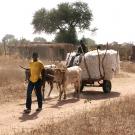
The AMA Innovation Lab has just launched a new project in partnership with the Ghana Agricultural Insurance Pool (GAIP) to improve the quality of agricultural index insurance available to the nation’s small-scale farmers.
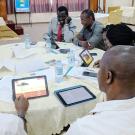
A February 14-15, 2019 conference in Uganda convened 85 researchers and regional experts on agricultural insurance implementation and policy for to add to work already underway.
The AMA Innovation Lab has just joined the Microinsurance Network, a worldwide leader in bringing together microinsurance experts to promote effective risk management tools to meet global development objectives.
New AMA Innovation Lab research shows that promoting low-cost but advanced farming methods through agricultural extension can significantly increase food security and resilience, especially when the higher cost of improved inputs keeps them out of reach.
USAID and UC Davis are partnering to establish the world's first quality certification for agricultural index insurance in Kenya. The QUIIC certification will help ensure that products for small-scale farmers across East Africa truly can promote long-term resilience.
More than 300 leaders from world governments, the donor community, researchers and the private sector participated in the ICED “Evidence to Action Conference 2018” in Nairobi on July 24-25 to enhance sustainable collaboration and knowledge sharing and to reinforce demand-driven, evidence-based policy.
In July, 2018 in Tanzania, the AMA Innovation Lab convened insurance leaders from research, government and the private sector to exchange knowledge on effective agricultural index insurance for economic development.
A Feed the Future AMA Innovation Lab pilot project in Tanzania that pairs drought-tolerant hybrid maize with insurance has found early success with adoption and in-kind payouts.
The Global Action Network (GAN) collaboration between the AMA Innovation Lab and the ILO's Impact Insurance Facility has brought to the forefront one of the greatest challenges facing the advancement of agricultural index insurance: quality.
New results from AMA Innovation Lab index insurance projects in West Africa show that when drought struck in Burkina Faso, the insurance stepped in as a safety net, but in Mali as well farmers invested significantly more in their crops.